Dental Implants
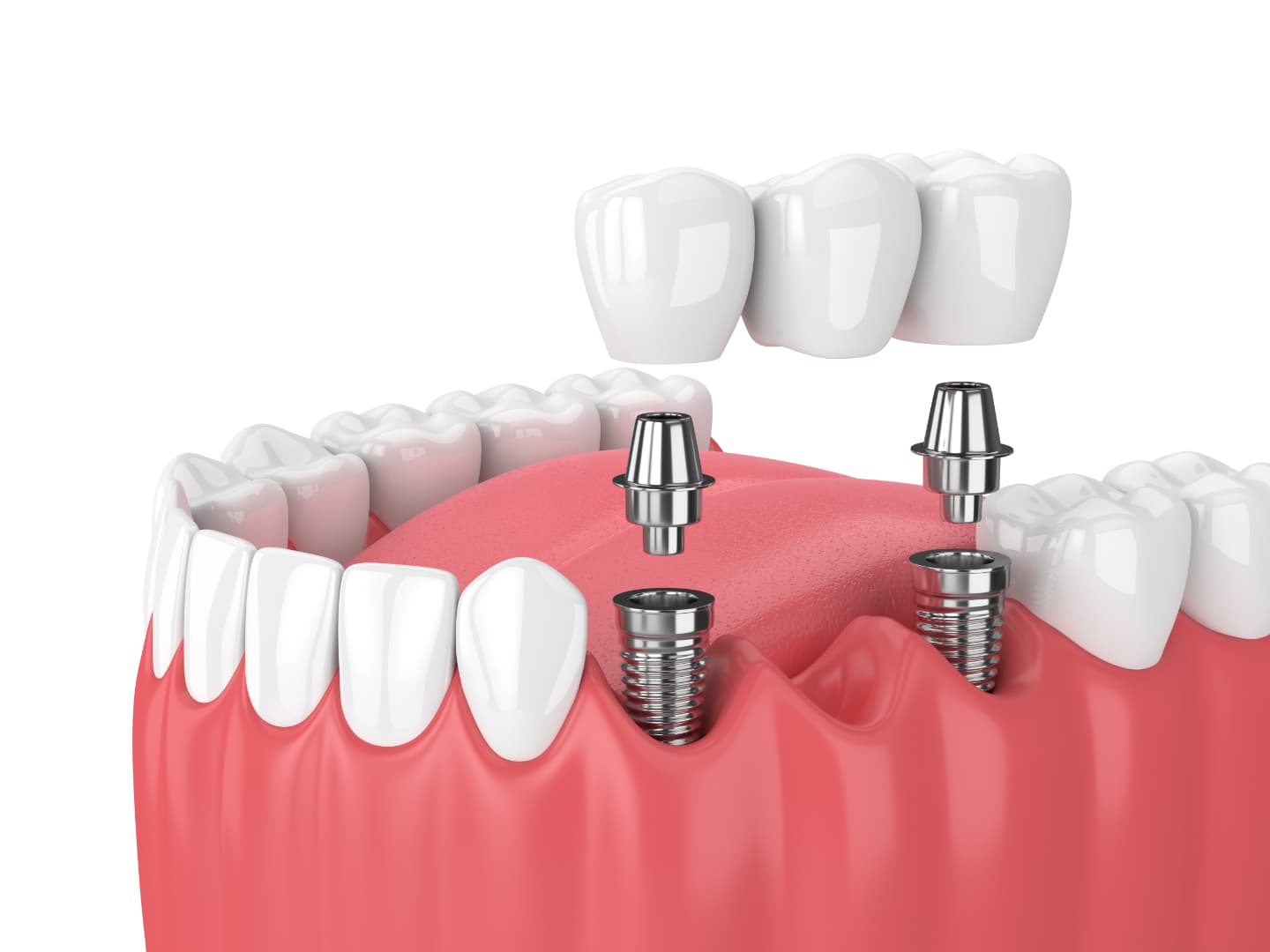
We offer long-lasting artificial root solutions that integrate with the mouth naturally and replace missing teeth with a fully natural appearance.
What Are the Advantages of This Treatment?
Feels like your own tooth again: implants restore chewing and speaking ability with a stable base that functions very close to a natural root.
Helps stop bone loss: they are the key treatment that supports the jawbone in the extraction area and helps prevent collapse over time.
Protects adjacent teeth: unlike conventional bridges, healthy neighboring teeth do not need to be trimmed down.
Biological compatibility: titanium integrates exceptionally well with body tissues and is widely trusted for long-term stability.
Treatment Stages
Digital Planning
With 3D dental tomography, the bone structure is analyzed in detail and the safest implant angles are simulated digitally before surgery.
Surgical Placement
Under local anesthesia, the implant is inserted into the jawbone in a controlled and comfortable procedure that is typically quick and carefully managed.
Osseointegration
A healing period of roughly two to four months allows the implant to fuse securely with the jawbone.
Final Restoration
Once healing is complete, a porcelain or zirconia crown produced to match your facial proportions and natural tooth shade is attached to the implant.
Frequently Asked Questions
Why should I travel to Turkey and choose Side Shine for dental implants?
Turkey is one of the world’s leading destinations for dental tourism thanks to competitive pricing, advanced digital clinics and highly experienced clinicians. At Side Shine, we coordinate the full process for international patients, from VIP transfers and accommodation planning to the treatment itself, so you can focus on the result rather than the logistics.
What does the treatment and healing timeline look like?
Implant treatment progresses in planned stages. After assessment and 3D imaging, the implant is placed in a comfortable surgical session. The jawbone is then given time to fuse biologically with the implant, which often takes around three to six months. Once that integration is complete, the final porcelain or zirconia tooth is attached. Initial gum healing is much faster and many patients return to normal daily life within a few days.
How should I take care of my implant after treatment?
Implants should be cared for just like natural teeth. Brushing at least twice daily, cleaning around the implant carefully with suitable brushes or floss and attending routine dental check-ups are the essentials. Hard habits such as cracking nuts, chewing ice or grinding heavily at night should also be addressed to protect the final restoration.
What is the success rate of modern dental implants?
When treatment is planned properly and placed by experienced clinicians using high-quality titanium systems, implant success rates are very high and commonly reported above 95 percent. Good oral hygiene and regular follow-up are major factors in protecting that success over the long term.
Will my implant tooth really feel like a natural tooth?
In many cases it feels remarkably natural. The visible porcelain tooth is custom-designed to match your face, smile and neighboring teeth, while the implant root itself anchors inside the jaw in a way that provides stable chewing and speech support.
What if my jawbone is too thin or has already shrunk?
Limited bone volume does not automatically rule out implant treatment. In many cases, supportive procedures such as bone grafting or sinus lifting can rebuild the foundation and make implant placement possible. These steps may extend treatment time, but they can create a much safer long-term result.
How long can an implant stay strong in my mouth?
With consistent hygiene, healthy supporting tissues and regular professional reviews, implants can remain stable for decades and are often considered a long-term or even lifelong solution.
I smoke. Can I still have implant treatment?
Many adult patients can still be candidates, but heavy smoking slows tissue healing and increases the risk of complications during the integration period. Smoking does not always make treatment impossible, but it is an important risk factor that should be discussed honestly before planning.
Will I feel pain during or after implant surgery?
Modern local anesthetics and contemporary surgical techniques make implant placement a comfortable procedure for most patients. After surgery, some mild tenderness can occur in the area where the implant bed was prepared, but this is usually controlled well with standard pain medication and aftercare.
Is there a risk of infection after implant placement?
Yes, although it is uncommon. After surgery, medications and hygiene guidance are provided to reduce that risk, and when patients follow cleaning and review instructions carefully, infections are usually avoided or handled early.
How long does the wound itself take to heal?
The gum surface generally settles within days to one or two weeks, while the deeper biological fusion between bone and implant takes several months. Both phases are important, but they happen on different timelines.
How do I know whether I am a suitable candidate for implants?
If your mouth and gums are generally healthy and there is enough bone support, you may be an excellent candidate. Even when bone volume is limited, preparatory procedures can often create the right conditions. Imaging and clinical examination are what determine suitability.
What are my options if I do not want an implant?
If you do not want surgery or prefer to avoid the longer healing timeline, other restorative options such as zirconia bridges may be considered. Those alternatives can fill the gap esthetically, although they do not replace the root in the same way an implant does.