
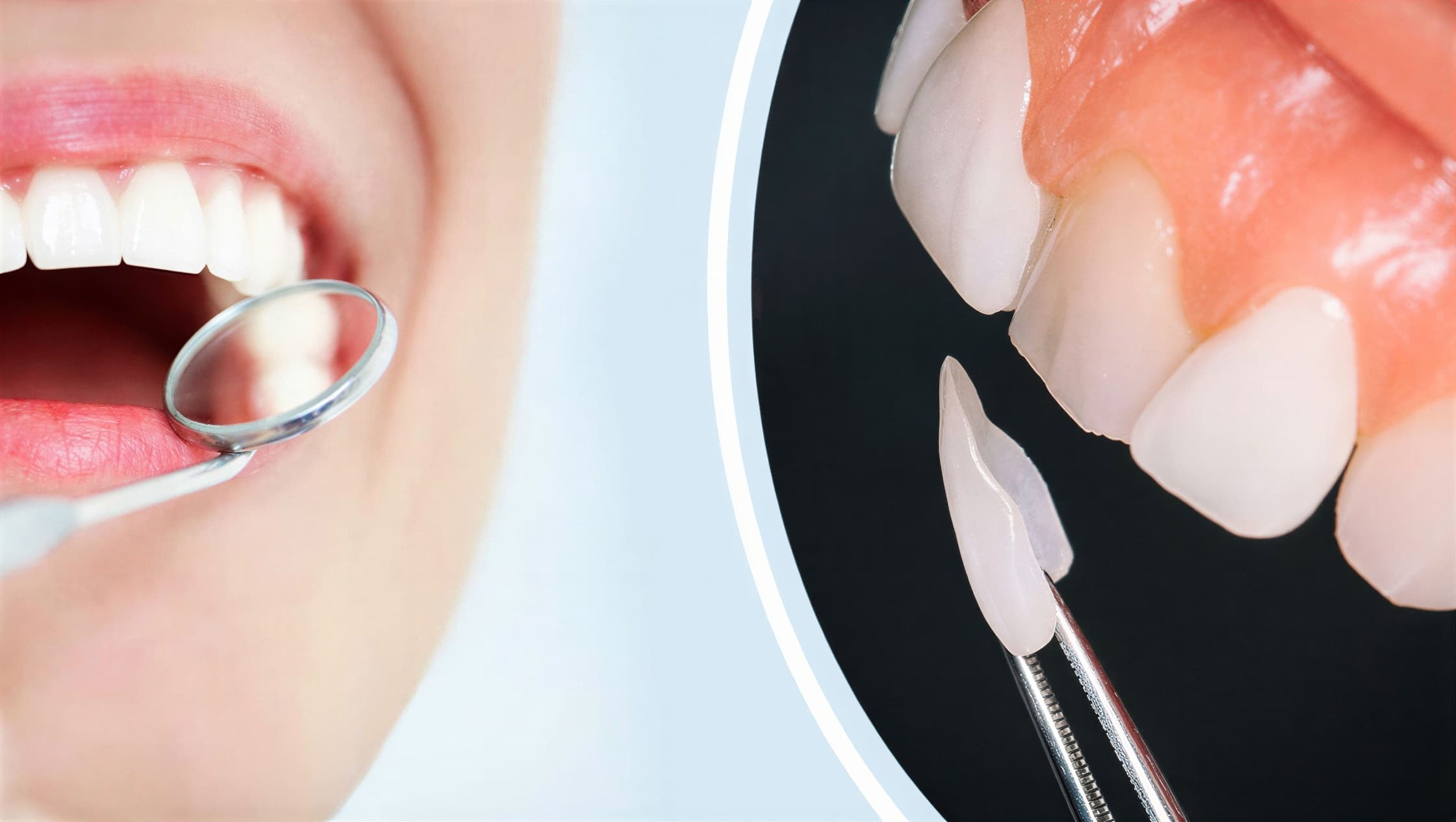
Lamina Veneers
Ultra-thin ceramic veneers that improve color and shape with minimal intervention.
What Are the Advantages of This Treatment?
One of the most conservative esthetic options: only a very thin layer, often around 0.3 to 0.7 mm, is removed from the front of the tooth.
Exceptional smile-zone esthetics: translucency, surface smoothness and fine ceramic work allow a highly natural and elegant result.
Short treatment timeline: in many cases, veneers can be delivered within two or three appointments.
Minimal sensitivity risk: because the deeper tooth structure and back surface are preserved, long-term sensitivity is typically low.
Treatment Stages
Esthetic Evaluation & Mock-up
Videos, photos and wax-up planning are used to sculpt the intended form before any irreversible preparation is carried out.
Micro-Preparation
The front enamel surface is lightly refined only as much as necessary to create ideal space for the veneer.
Digital Impression
A precise optical scan is taken so the ceramic veneers can be fabricated with CAD/CAM-supported accuracy.
Final Bonding
The finished veneers are bonded with advanced adhesive systems that create a strong and highly integrated union with the tooth surface.
Frequently Asked Questions
Can lamina veneers fall off, and can I bite into normal foods?
When veneers are bonded properly with modern adhesive protocols, the bond is extremely strong. Normal daily biting such as eating fruit is usually not a problem, although damaging habits like cracking hard shells or biting pens should still be avoided.
Will coffee or tea stain veneers?
No. Porcelain veneer surfaces are non-porous and highly resistant to staining, so they generally preserve their polished appearance much better than natural enamel.
Is lamina treatment painful?
Because only a very thin layer of tooth structure is adjusted, the treatment is usually very comfortable. In some cases, little or no anesthesia is needed.
How many years do lamina veneers last?
With good oral hygiene and regular reviews, well-made veneers can remain functional and esthetic for many years, often 15 years or longer.
What is the difference between lamina veneers and zirconia crowns?
Lamina veneers cover only the front surface and require much less tooth reduction, while zirconia crowns cover the whole tooth and are better suited when more structural reinforcement is needed.
How many visits are usually needed?
Many veneer cases are completed in two to three visits. The first stage involves planning and preparation, and the following visit or visits are used for try-in and final bonding.
Will veneers look natural or too artificial?
Lamina veneers are among the most natural-looking esthetic restorations available because the ceramic can imitate enamel translucency and fine surface detail very convincingly.
Will I have sensitivity after treatment?
Mild temporary sensitivity may occur during the first few days, but because the deeper tooth structure is preserved, the long-term risk of ongoing sensitivity is usually low.
Is having lamina veneers in Turkey cost-effective?
Turkey can offer advanced veneer treatment at a significantly lower cost than many Western markets while still using modern digital workflows and premium ceramics.
Is everyone a candidate for lamina veneers?
They are ideal for many esthetic front-tooth cases, but not every patient is suitable. Teeth with extensive decay, major structural loss or severe misalignment may require a different treatment such as zirconia crowns or orthodontics.